How to Write a Legionella Written Scheme of Control
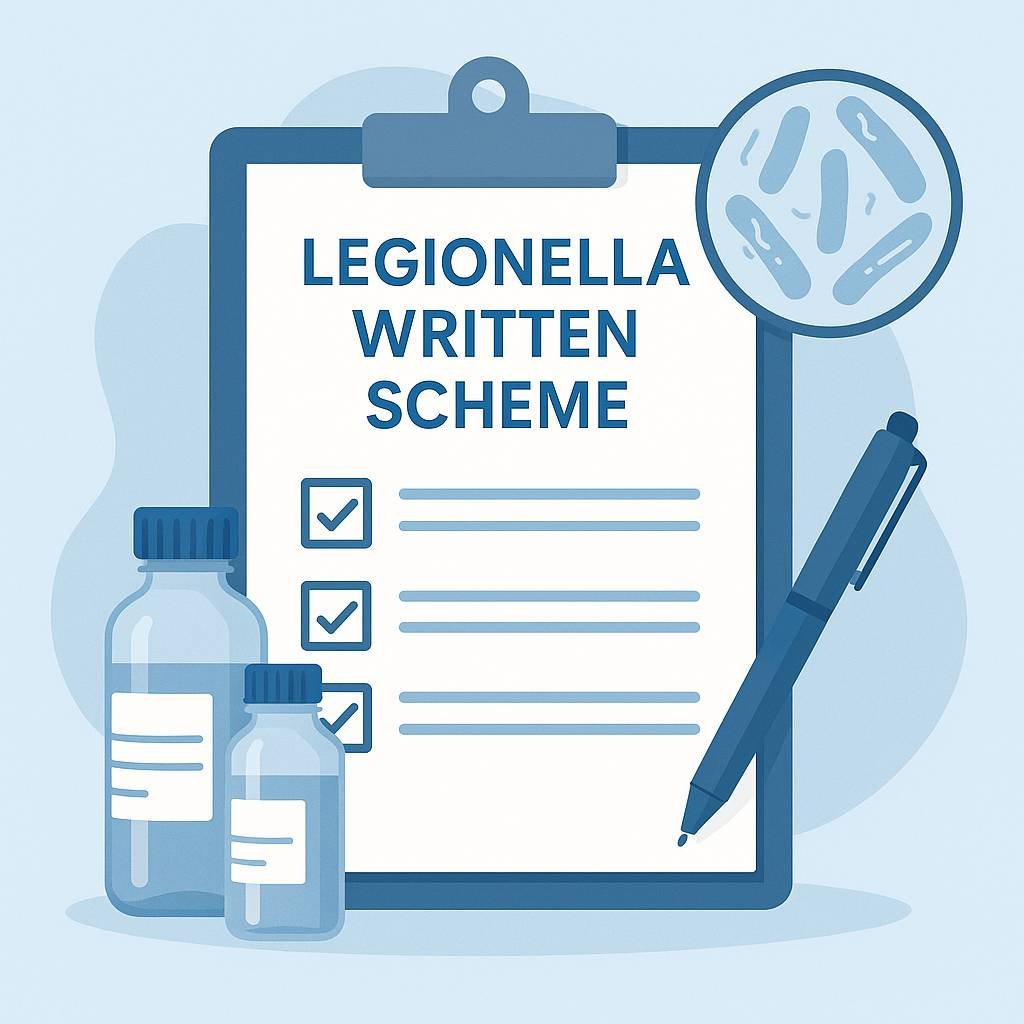
If a Legionella risk assessment identifies a reasonably foreseeable risk, UK law requires you to implement a Written Scheme of Control. This document outlines the steps you will take to control or eliminate the risk of Legionella exposure from your water system.
In this guide, we explain what a Written Scheme of Control is, who should write it, and how to create one that meets the requirements of ACOP L8 and HSG274.
Related topics:
What Is a Written Scheme of Control?
A Written Scheme of Control is a live document that defines how you will manage and monitor risks from Legionella bacteria in a specific building or water system. It forms a core part of legal compliance under the Approved Code of Practice L8 (ACOP L8) and should reflect the unique features of your system.
It must include:
- A description of your water system (with diagrams)
- Control measures to reduce Legionella risk
- Monitoring and inspection tasks
- Actions to take if controls fail
- Names and responsibilities of key personnel
Is a Written Scheme a Legal Requirement?
“Where this is not reasonably practicable [to eliminate the risk], there should be a written scheme for controlling the risk from exposure that should be properly implemented and managed.” — ACOP L8, Paragraph 58
Failure to have one may result in enforcement action, fines, or prosecution under:
- The Health and Safety at Work etc. Act 1974
- COSHH Regulations 2002
- Management of Health and Safety at Work Regulations 1999
Who Should Write the Written Scheme?
Your Written Scheme should be developed by a competent person — either:
- A trained in-house manager (e.g. facilities or H&S lead)
- An external Legionella risk assessor or compliance consultant
The scheme must reflect the actual conditions and usage of your water system, so generic templates are not enough. It must also be kept up to date and reviewed regularly.
What to Include in a Written Scheme of Control
According to ACOP L8 and HSG274, your written scheme should include the following sections:
1. Schematic Diagram of the Water System
- Show the layout of all water systems, tanks, calorifiers, outlets, valves, and dead legs
- Identify key control points and any parts of the system not in regular use
2. Description of Normal Operation
- How water flows through the system (e.g. hot water generation, circulation)
- Temperatures maintained at different points
- Typical daily usage patterns and peak demand times
3. Control Measures
- Temperature checks (e.g. hot water ≥ 50 °C, cold water ≤ 20 °C)
- Flushing of seldom-used outlets
- Descaling or disinfecting procedures
- Biocide/chemical treatments, if used
- Physical maintenance (e.g. insulation, cleaning of tanks and strainers)
4. Monitoring & Inspection Schedule
- Frequency of tasks (e.g. weekly, monthly, annually)
- Locations and parameters to be checked (e.g. temperature, biocide levels)
- Person responsible for each task
- Tolerance ranges and corrective actions
5. Actions to Take If Controls Fail
- What to do if temperatures are out of range
- Steps to isolate or flush outlets
- Emergency disinfection procedures
- Notification of affected personnel
6. Record Keeping
- How and where records are stored
- Minimum retention periods (usually 5 years)
- Procedures for verification and sign-off
7. Names and Responsibilities
- Identify the Responsible Person and their deputies
- Include external contractors and their scope of responsibilities
Before writing your scheme, ensure you’ve completed a proper Legionella risk assessment.
You may also want to check the legal requirements under ACOP L8.
Visit our homepage for full details on local Legionella testing in Doncaster.