
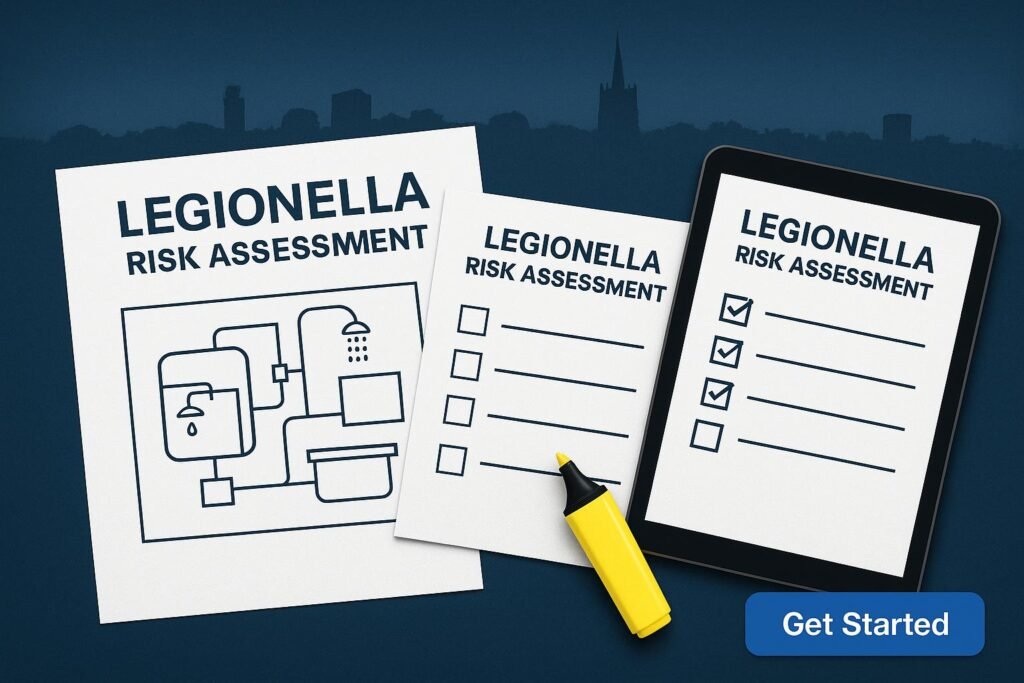
The Role of the Responsible Person for Legionella Control
One of the most important legal duties under UK Legionella regulations is to appoint a Responsible Person — someone with the authority and competence to manage Legionella control measures. This page explains who the Responsible Person should be, what their legal duties are, and how to ensure they’re properly trained and accountable.
What Is a Responsible Person?
Under the ACOP L8 Approved Code of Practice, a Responsible Person is someone appointed to oversee the control of Legionella risk within a building or organisation.
They are accountable for:
- Ensuring a Legionella risk assessment is carried out
- Implementing and monitoring a written scheme of control
- Keeping accurate records
- Coordinating maintenance, testing and corrective actions
The Responsible Person may be an employee, site manager, landlord, or even the business owner — as long as they are competent and have the authority to take action.
What Does ACOP L8 Say?
“A competent person should be specifically appointed to take day-to-day responsibility for controlling any identified Legionella risk. This person is referred to as the Responsible Person.” – ACOP L8, Paragraph 51
The law requires that:
- The Responsible Person must have sufficient authority, competence and knowledge
- Their responsibilities must be clearly documented
- They must receive regular training and refresher courses
- If a business does not have a suitably competent employee, a qualified external service provider may be appointed
What Are the Key Responsibilities?
1. Overseeing Risk Assessment
The Responsible Person ensures that a suitable and sufficient Legionella risk assessment is conducted by a competent person.
2. Implementing a Written Scheme of Control
They must ensure that a clear, practical written scheme exists. This includes:
- Temperature checks
- System cleaning and disinfection
- Flushing of unused outlets
- Chemical dosing or biocide treatments
3. Monitoring Control Measures
They are responsible for supervising checks, logging temperatures, and managing water sampling if required. This can be done directly or delegated — but the accountability remains with them.
4. Record Keeping
Records of risk assessments, tests, maintenance and corrective actions must be:
- Stored safely
- Kept for at least 5 years
- Signed or authenticated
5. Coordinating Contractors and Staff
They liaise with cleaning teams, maintenance engineers and water treatment providers. If multiple people or organisations are involved, the Responsible Person must ensure roles are clearly defined and communication is effective.
Who Can Be a Responsible Person?
A Responsible Person can be:
- The business owner
- A health & safety officer
- A facilities or maintenance manager
- A landlord or letting agent
- An external Legionella consultant
They must receive proper training and stay up to date with legal responsibilities and control techniques.
Related Legionella Guidance:
- Your Legal Duties Under UK Legionella Law
- Step-by-Step: How to Carry Out a Legionella Risk Assessment
- How to Write a Legionella Written Scheme of Control
If you’ve been appointed as a responsible person, it helps to understand how the assessment process works.
You may also need to create a written scheme of control to stay compliant.
Find full service info on our Legionella Risk Assessment homepage.